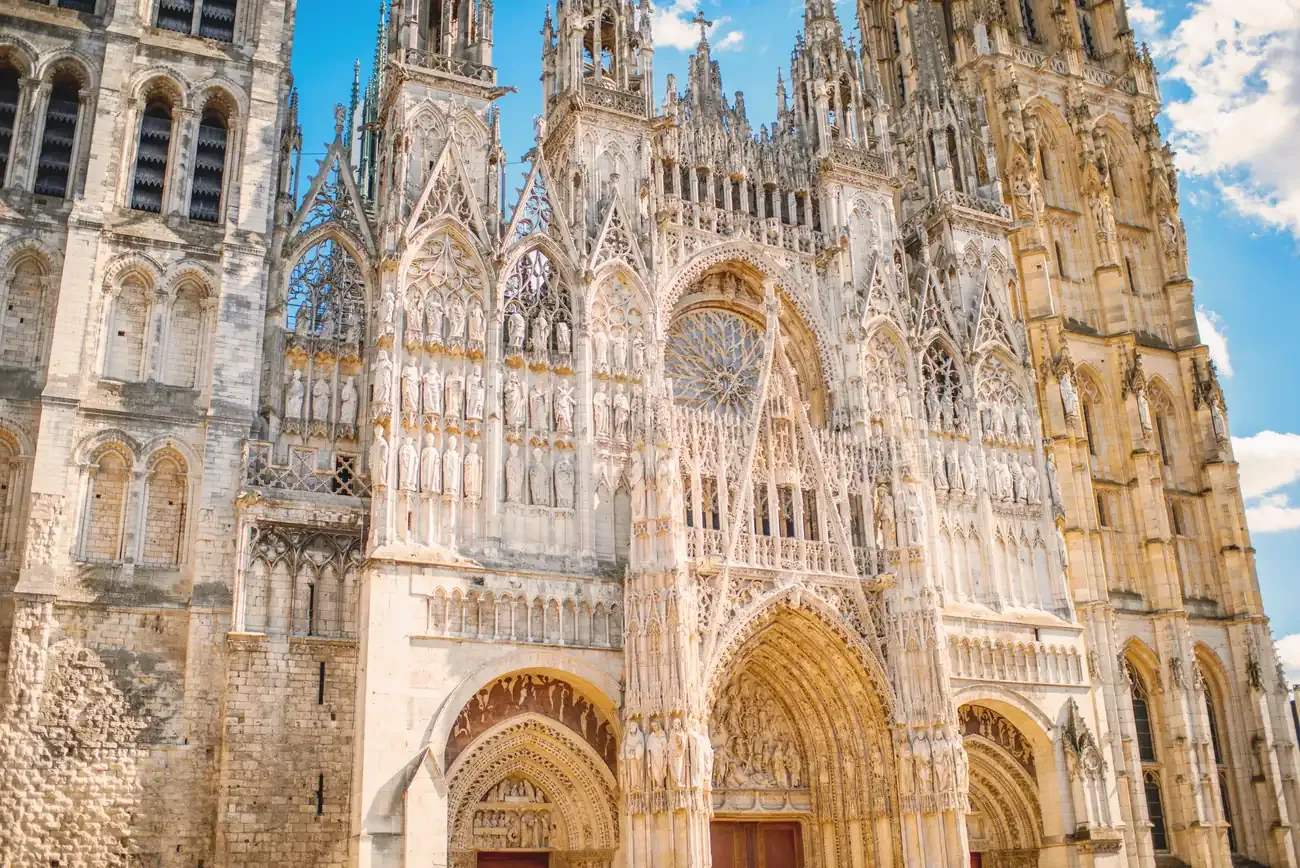
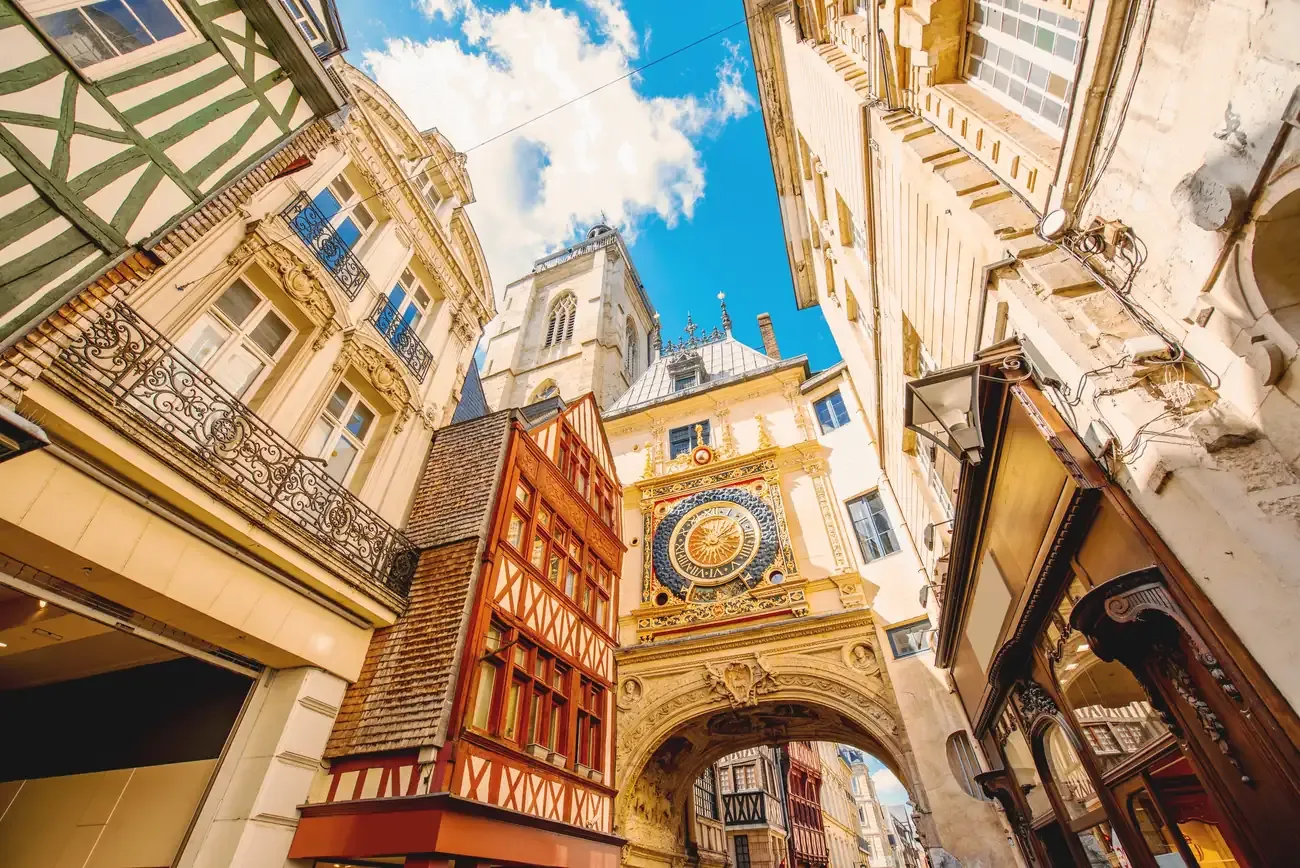
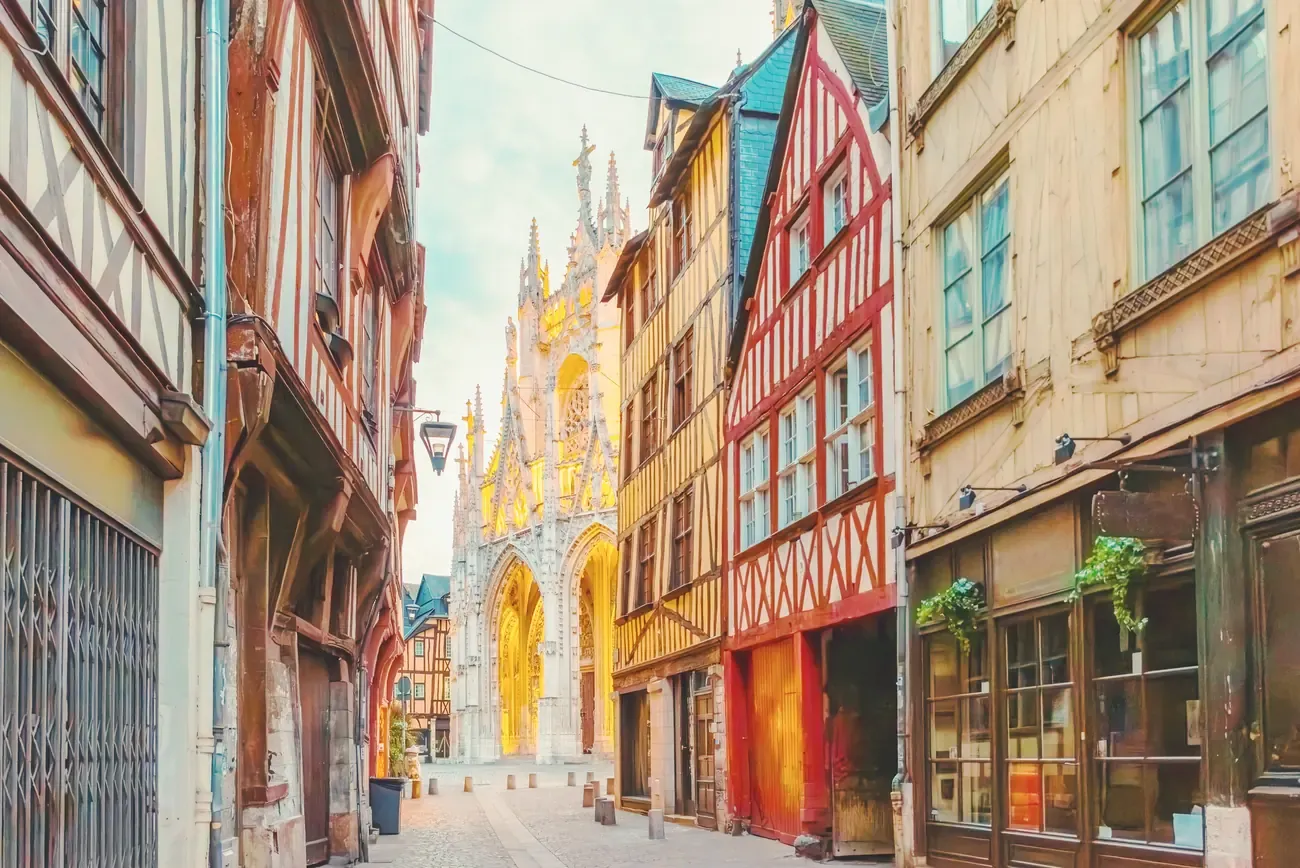
Rouen packs a Gothic cathedral, a medieval clock tower and streets of half-timbered houses into a compact old town on the Seine, all of it walkable in a single day. Victor Hugo called it "the city of a hundred spires" in an 1831 poem, a nod to the dozens of church towers that once rose above its rooftops, and Claude Monet later made the cathedral itself the subject of one of his best-known series.
A city shaped by two stories
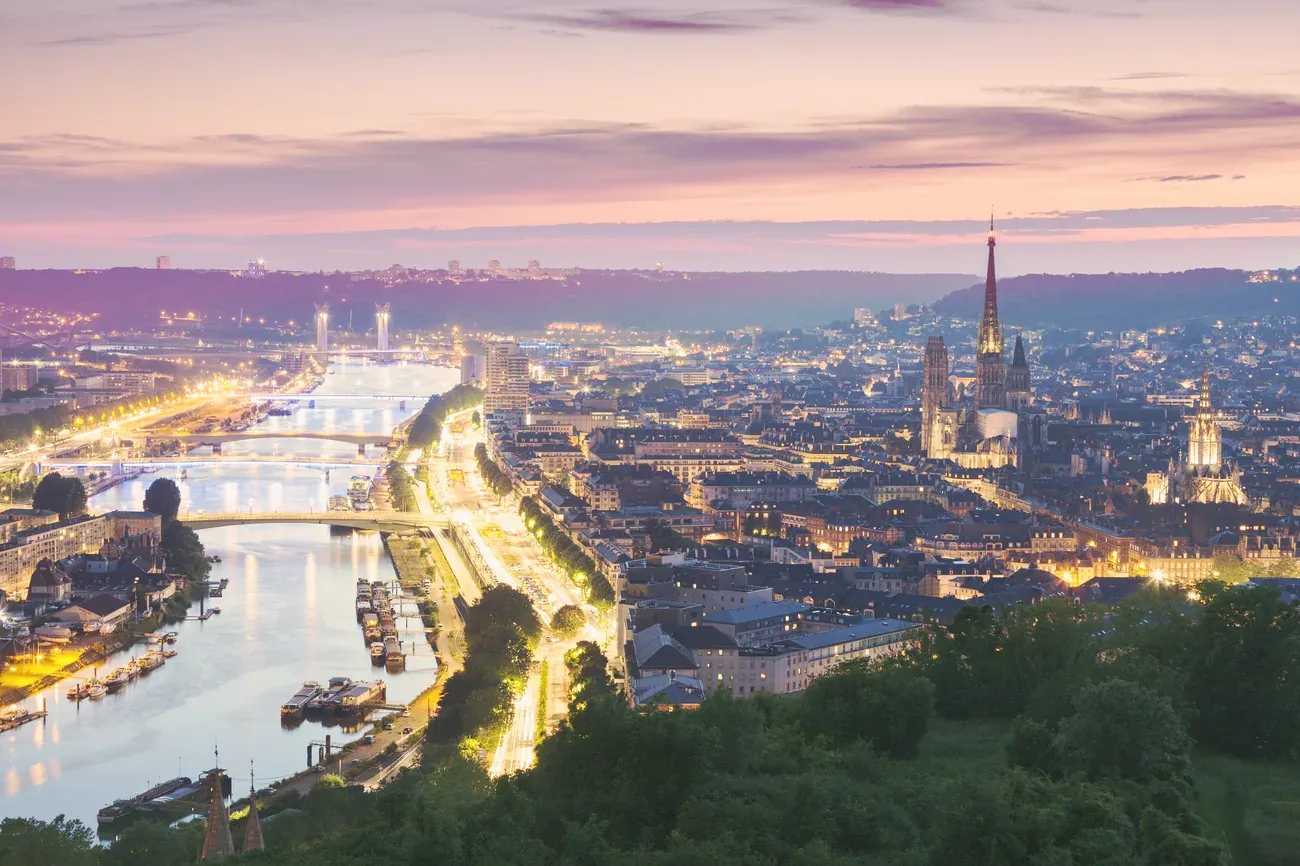
Rouen's skyline is Gothic churches close together: the cathedral, Saint-Maclou and Saint-Ouen all stand within a few streets of each other. Running through the same streets is the story of Joan of Arc, tried and burned here in 1431, which the Historial Jeanne d'Arc and the Place du Vieux-Marché both tell from different angles.
Old town and the Seine
The historic core sits on the river's right bank, its half-timbered lanes radiating from the Gros-Horloge and the cathedral. The left bank across the Seine is the modern, largely rebuilt side of the city, while the Côte Sainte-Catherine hillside to the east gives the wide view back over both banks.
When to go and how long to stay
A single day covers the old town at a steady pace. Rouen also works well as a base for day trips into the wider region covered on Normandy's tourist attractions page, from the D-Day coast to Étretat, or further west to Mont-Saint-Michel, which sits beyond easy day-trip range but draws many visitors passing through Normandy.
Getting around
The old town is entirely walkable, with the Metrobus tram line useful for reaching the station or the left bank. Direct trains connect Rouen with Paris Saint-Lazare in around 1 hour 20 minutes, making it a common day trip from the capital as well as a stop in its own right. Its cathedral belongs to the same run of great French Gothic churches as Chartres, Reims and Amiens, which is why it turns up on most lists of the top tourist attractions in France.