
Prague tourist attractions
Known for
Gothic and Baroque skylines on both banks of the Vltava
Must-see landmarks
Prague Castle, Charles Bridge, Old Town Square and the Jewish Quarter
World Heritage
Historic Centre of Prague, UNESCO listed since 1992
Getting around
Walkable historic core, with trams and metro covering the rest of the city
The 10 tourist attractions to see in Prague
For a first visit, the tourist attractions in Prague come down to Prague Castle, Charles Bridge, Old Town Square and 7 more sights ranked below, plus free things to do, tickets and visitor FAQs.
1. Prague Castle
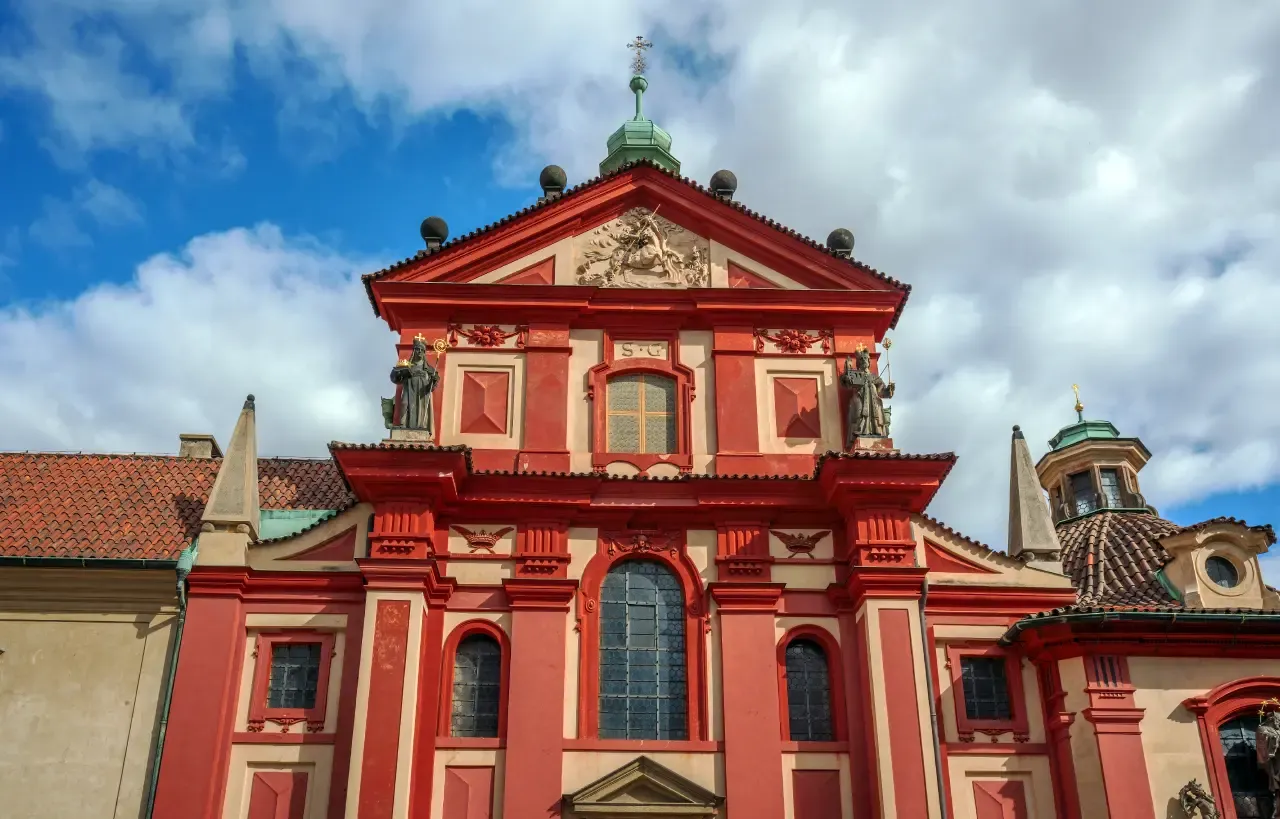
Prince Bořivoj founded the castle above the river in the 880s, and Prague City Tourism calls its 45 hectares the largest castle complex in the world. Bohemian kings, Holy Roman emperors and today the Czech president have all ruled from here, and the buildings trace almost every European style as each century added to them. Gothic St Vitus Cathedral rises at the centre, beside the Old Royal Palace, the houses of Golden Lane and the Romanesque St George's Basilica.
Style: Romanesque, Gothic, Renaissance and Baroque
Location: Hradčany, on the hill above Malá Strana
Access: A single ticket covers the historic interiors, St Vitus Cathedral, the Old Royal Palace, Golden Lane and St George's Basilica; the courtyards can be walked through without one. · Tickets and tours
2. Charles Bridge
Charles IV commissioned this stone crossing over the Vltava in 1357, and it was finished around 1402 under the master builder Peter Parler. Thirty Baroque statues line the balustrades, most raised between 1706 and 1714, from the bronze figure of St John of Nepomuk to groups added as late as the twentieth century. For four hundred years it was the only bridge linking the Old Town with the castle side, and it still carries a steady current of walkers, buskers and portrait artists between the two banks, while boats for river cruises on the Vltava leave from the piers beside it.
Architect: Peter Parler · Style: Gothic
Location: Across the Vltava, linking Staré Město and Malá Strana
Access: Free; an open pedestrian bridge at any hour.
3. Old Town Square
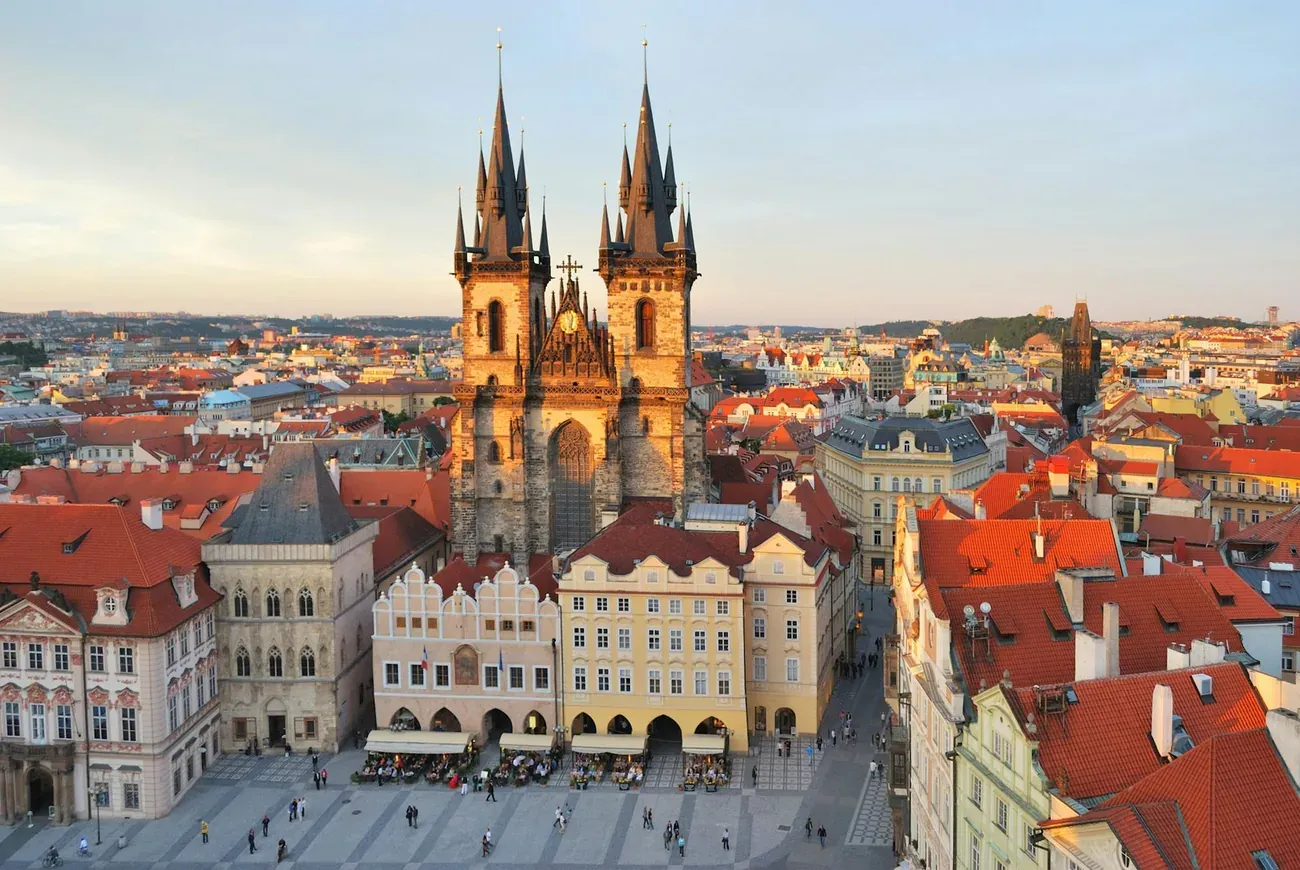
The heart of Staré Město has been a marketplace since the tenth century and now gathers the city's finest facades around a wide cobbled space. The twin Gothic towers of the Church of Our Lady before Týn rise on one side, the Baroque St Nicholas Church on another, and the Art Nouveau monument to the reformer Jan Hus stands at the centre. Cafes and pastel houses fill the edges, and the Old Town Hall with its astronomical clock anchors the southwest corner, where crowds gather on the hour.
Location: Staré Město, between Charles Bridge and the Powder Tower
Access: Free; an open public square.
4. Prague Astronomical Clock
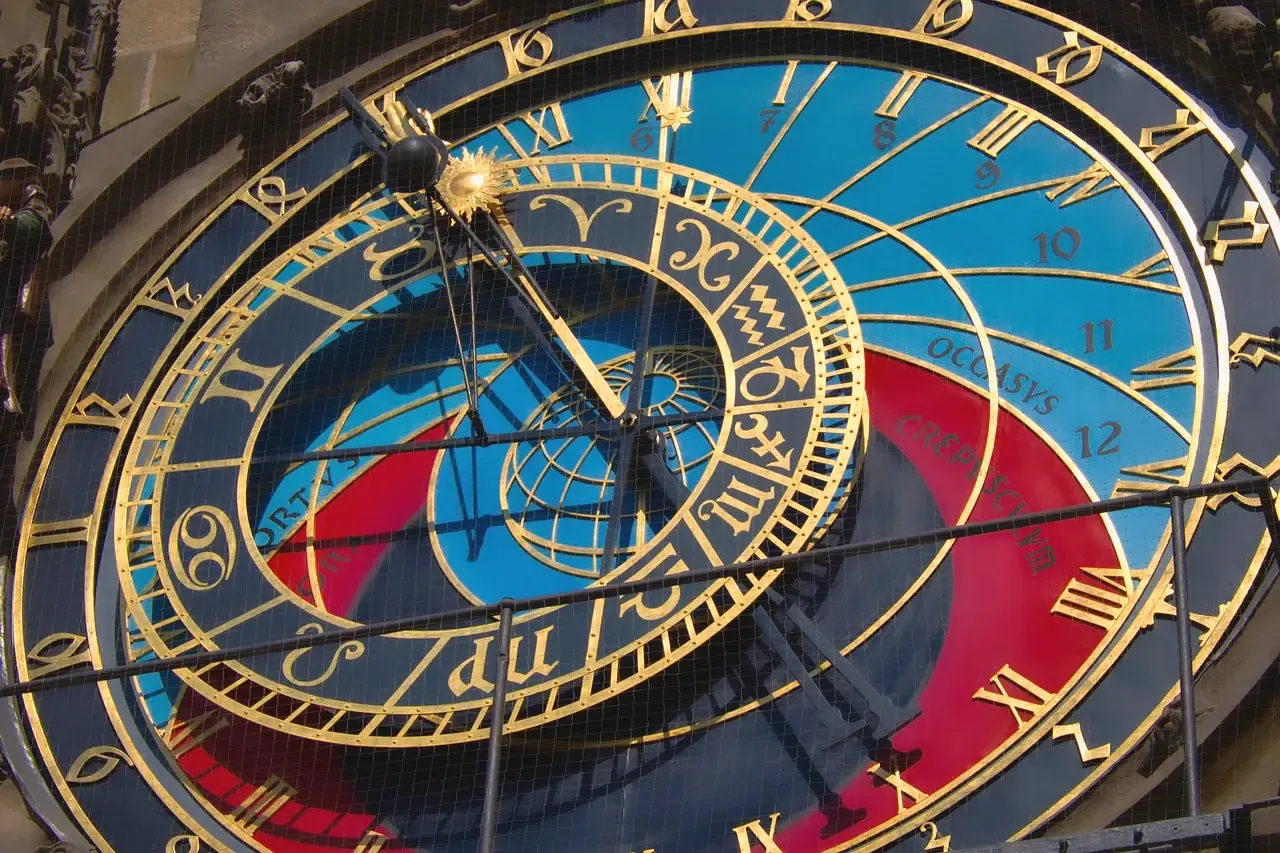
The clockmaker Mikuláš of Kadaň mounted the orloj on the Old Town Hall in 1410, and Hanuš of Růže refined it later that century, making it the oldest astronomical clock still working anywhere. Its blue and gold dial tracks the sun, moon and zodiac around a fixed earth, while a painted calendar wheel below marks the saints' days. Every hour from 8:00 to 23:00 the Walk of the Apostles turns above the crowd: two windows open, twelve figures pass, a skeleton tolls the bell and a golden cockerel crows to close the show.
Location: Old Town Hall, Old Town Square
Access: Watching the hourly show is free from the square; the Old Town Hall and its tower are ticketed. · Tickets and tours
5. St Nicholas Church
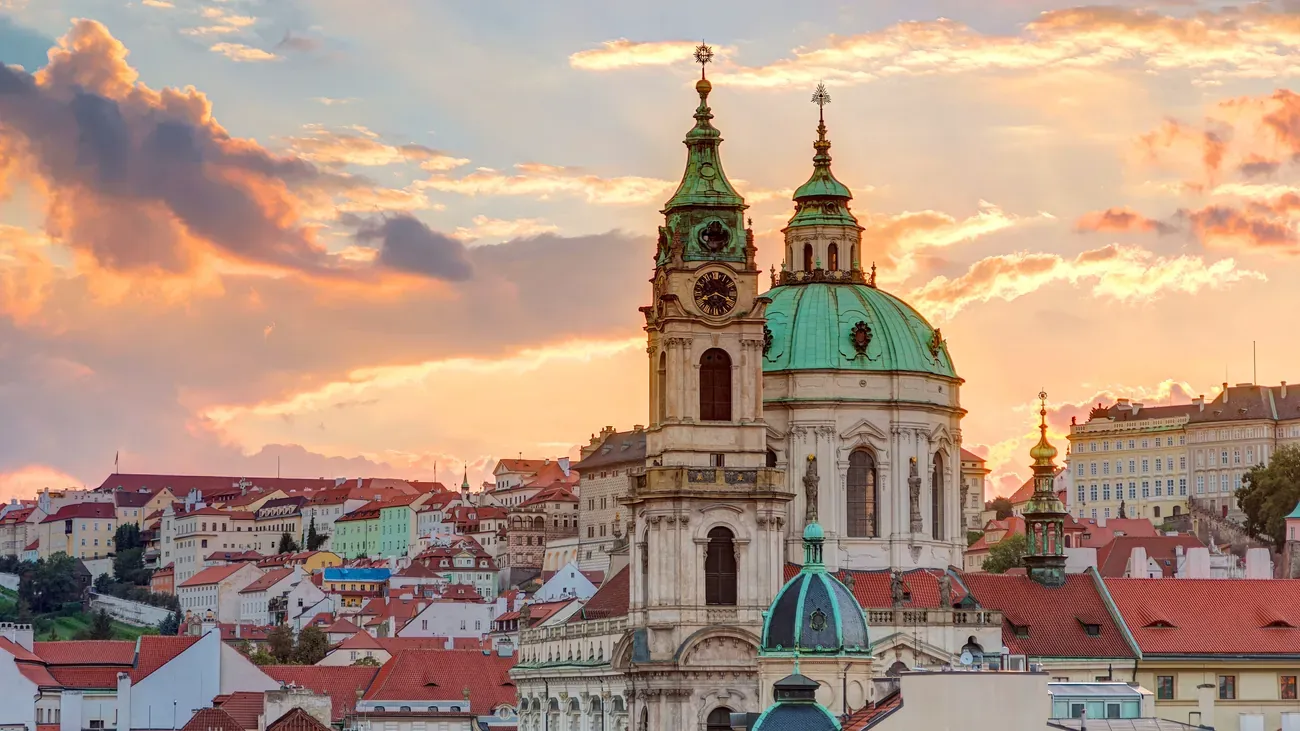
Three generations of the Dientzenhofer family and their son-in-law Anselmo Lurago spent close to a century raising this church, consecrated in 1743, and it calls itself the most famous Baroque building in Prague. Its green copper dome and bell tower dominate the skyline of Malá Strana, the Lesser Town below the castle. Inside, a soaring nave carries a vast ceiling fresco of the life of St Nicholas above marble, gilding and statues that make the church a set piece of Central European Baroque.
Architect: The Dientzenhofer family and Anselmo Lurago · Style: Baroque
Location: Malostranské náměstí, Malá Strana
Access: Ticketed.
6. Franz Kafka Museum
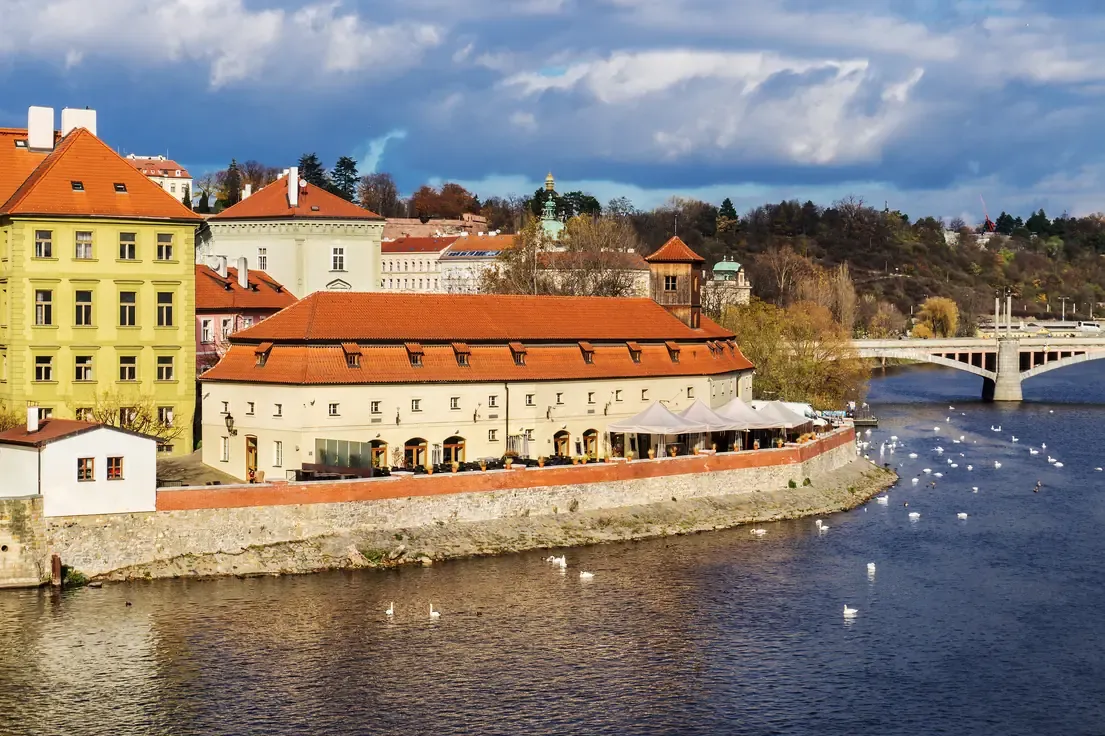
The museum opened in the summer of 2005 in the Herget Brickworks on the Malá Strana bank of the Vltava, a short walk from Charles Bridge. Its long-running exhibition sets out the world of the German-speaking Prague writer Franz Kafka, who lived from 1883 to 1924 and became one of the defining figures of twentieth-century literature. Original letters, diaries, photographs and first editions sit inside a deliberately dim, unsettling design of dark corridors, distorted models and audiovisual rooms meant to echo the anxiety and absurdity that run through his writing.
Location: Hergetova Cihelna, Cihelná 2b, Malá Strana
Access: Ticketed, open daily from 9:30 to 18:30.
7. Statue of Franz Kafka
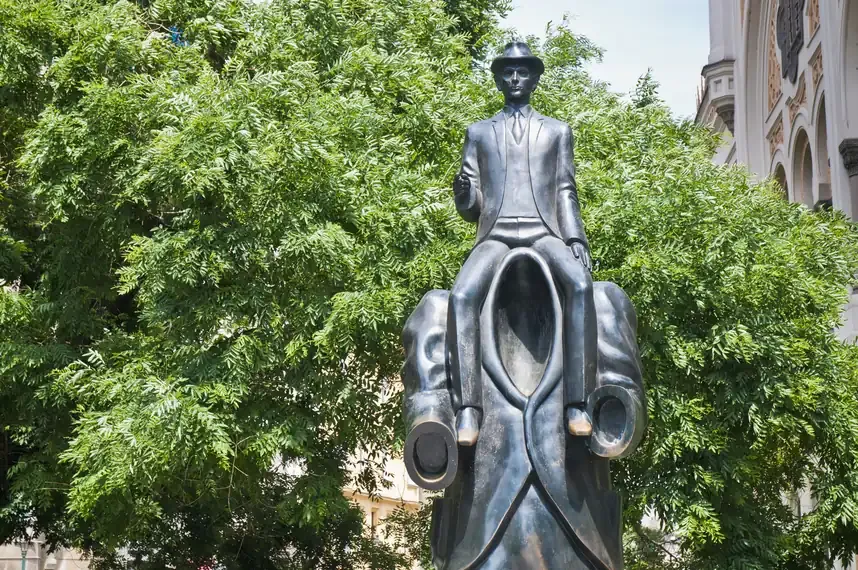
The sculptor Jaroslav Róna unveiled this bronze in 2003 on Dušní Street in Josefov, beside the Spanish Synagogue. It draws its image from Kafka's early story Description of a Struggle: a small, sharply dressed Kafka rides on the shoulders of a huge empty suit that strides forward with no head or hands inside it. Rising well above head height, the figure has become one of the city's favourite modern landmarks and a fixed stop on any walk through the old Jewish Quarter, where Kafka spent nearly his whole life within a few streets.
Location: Dušní Street, Josefov, beside the Spanish Synagogue
Access: Free; an outdoor sculpture, visible at any hour.
8. Prague Metronome
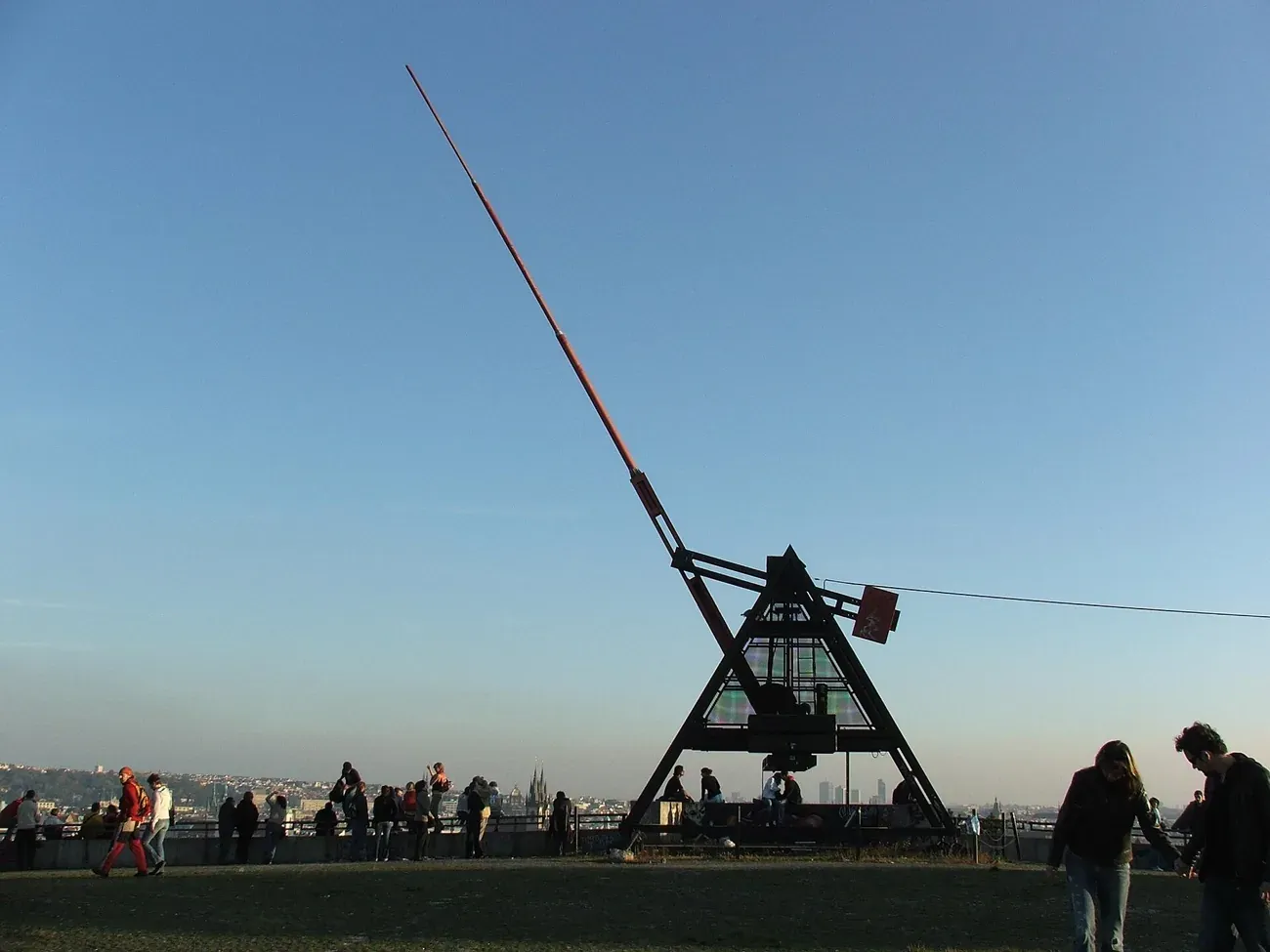
A giant red metronome nearly 25 metres tall has swung over Letná Park since 1991, on the terrace where a colossal granite monument to Stalin once stood before it was demolished in 1962. The artist Vratislav Novák built it as a comment on time and political change, though the great arm is more often still than moving. The plinth below has become an open-air gathering place for skateboarders and one of the widest views in the city, looking across the Vltava and its bridges to the Old Town and its spires.
Location: Letná Park, above the Vltava on the north bank
Access: Free; an outdoor landmark in a public park.
Photo: "Prague Metronome" by Hynek Moravec (CC BY).

9. Žižkov Tower
The tallest structure in Prague rises 216 metres over the Žižkov rooftops, a cluster of grey steel tubes built between 1985 and 1992 for television broadcasting. Ten giant faceless babies by the artist David Černý crawl up its columns, added in 2000 and now a fixed part of the outline. An observation deck 93 metres up gives a 360 degree view across the whole city, and the tower also holds a restaurant and a single one-room hotel suspended in one of its pods.
Location: Mahlerovy sady, Žižkov, east of the centre
Access: The observation deck is ticketed. · Tickets and tours
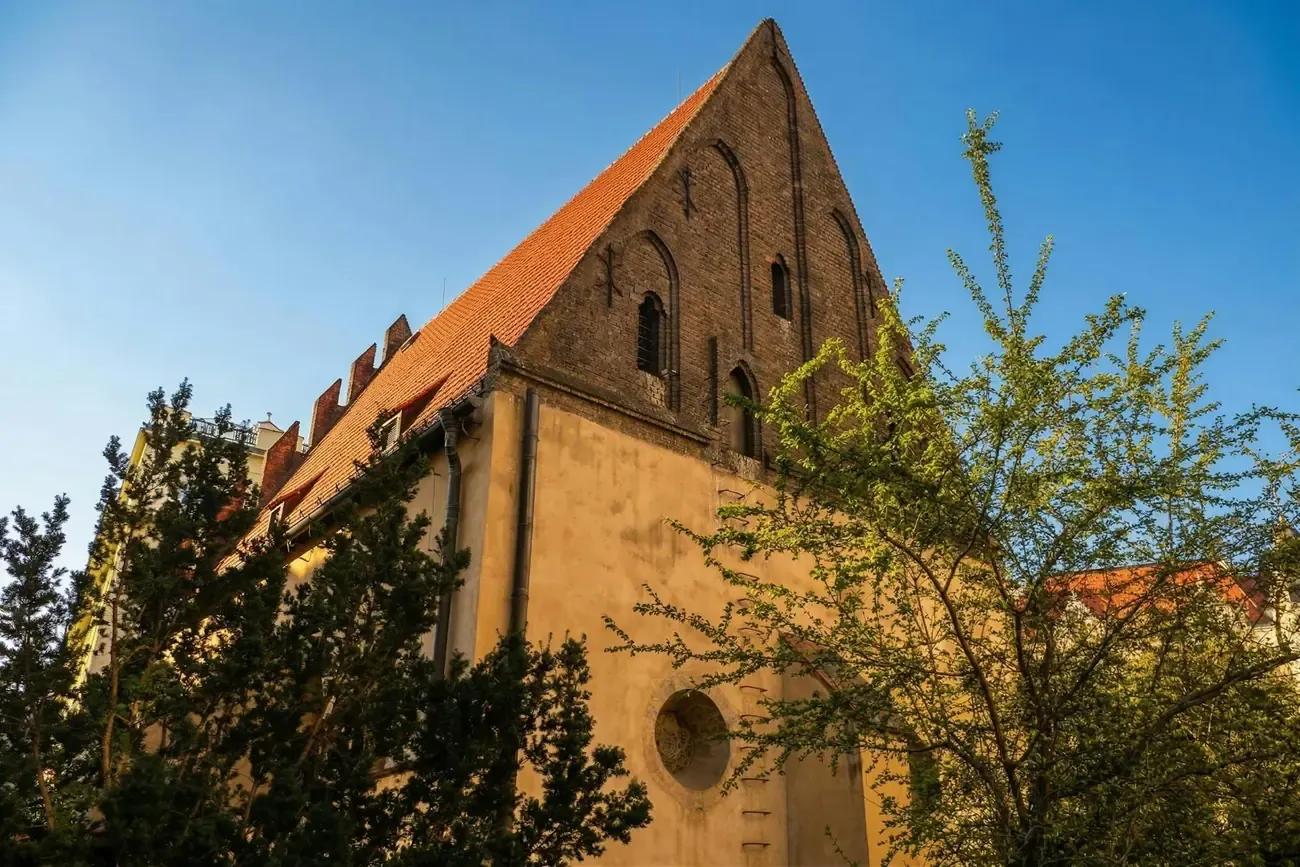
10. The Jewish Quarter
Josefov, tucked into the northern corner of the Old Town, was the walled home of Prague's Jewish community for centuries before most of it was cleared and rebuilt around 1900. What survives is remarkable: several historic synagogues, the Jewish Town Hall and the Old Jewish Cemetery, where thousands of worn headstones lean together in a small space. The Gothic Old-New Synagogue, from the late thirteenth century, is described as the oldest active synagogue in Europe, and legend places the clay Golem of Rabbi Loew in its attic.
Location: Josefov, northern Staré Město
Access: The Jewish Museum sites and the Old-New Synagogue are ticketed; the streets of Josefov are free to wander. · Tickets and tours
Prague attraction tickets and tours
What to do in Prague for free
Vyšehrad
The fortress's outdoor park, ramparts and cemetery are free to explore all year; only the underground casemates, home to original statues moved off Charles Bridge, need a booked and paid tour.
Letná Park
Letná itself costs nothing to walk at any hour, its hilltop lawns and paths framing one of the best free panoramas in the city without a queue or a ticket in sight.
Lennon Wall
This wall in Malá Strana has been freely repainted with John Lennon inspired graffiti, lyrics and peace messages by visitors and artists since the 1980s, and anyone can add to it or simply see it at any hour.
Náplavka riverside promenade
This free public promenade along the New Town riverbank is lined with cafes, houseboats and a weekend farmers market, liveliest in the evening when locals gather along the water.
Why Prague deserves your time
Prague grew from a river crossing at the foot of a fortified hill, where legend places Princess Libuše prophesying a great city before Vyšehrad rose in the mid-10th century and Prague Castle itself followed soon after under Prince Bořivoj. Charles IV made it an imperial capital in the 14th century, founding the university, the bridge that bears his name and much of what is now the Old Town. Spared serious bomb damage in the Second World War, Prague's compact medieval core survived close to intact, its Gothic spires and Baroque facades still climbing the same hillside above the Vltava. Its historic centre is a UNESCO World Heritage Site, one of the most complete anywhere on the list of tourist attractions to see in Europe.
Neighbourhoods to know
Hradčany and Malá Strana climb the castle hill on the river's west bank, all cobbled lanes, embassies and Baroque gardens. Staré Město, the Old Town, spreads east from Charles Bridge around Old Town Square, with Josefov, the Jewish Quarter, tucked into its northern corner. Nové Město, the New Town, fans out further east and south around Wenceslas Square and down to Vyšehrad, while Žižkov and Vinohrady keep a more local, residential pace further east.
When to go and for how long
April, May, September and October bring milder weather and thinner crowds than the peak of summer, when Charles Bridge and Old Town Square fill by mid-morning. Three to four full days cover the castle, the Old Town and the Jewish Quarter at a steady pace, with a fifth for Vyšehrad or a day trip further out. Evenings often turn to a traditional dinner show pairing folklore and beer with a view of the illuminated skyline.
Getting around
The historic core is compact enough to cross on foot, and trams and the metro's three lines reach the rest of the city quickly on a single ticket. Hop-on-hop-off buses link the main sights for visitors who would rather ride between them, and combined attraction passes suit anyone packing several paid sights into a short stay.